
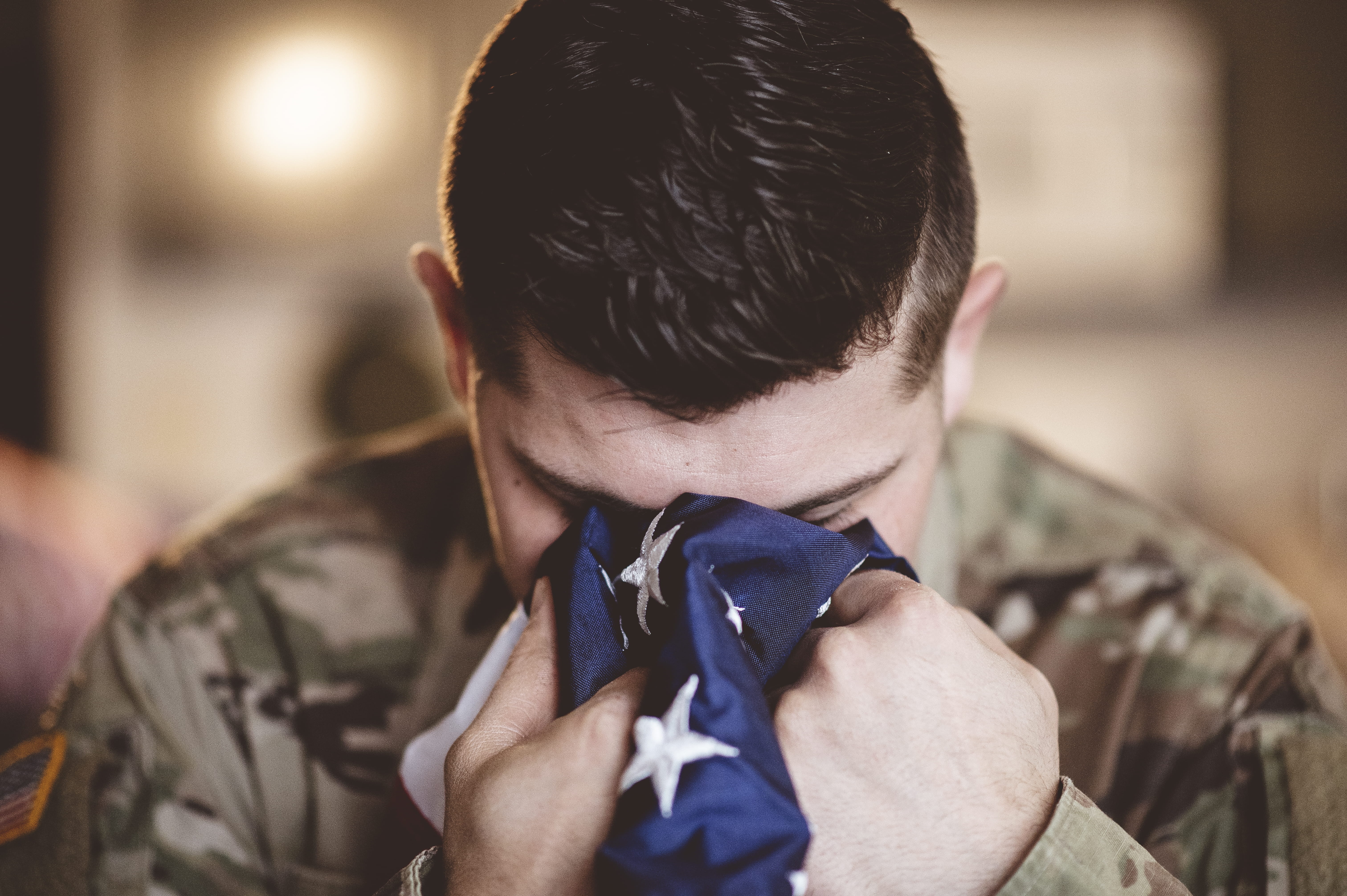
I completed my last combat deployment and retired from Active Duty in 2008. I served 3 OIF deployments, coming out of retirement in 2005 to go back on Active Duty. I was in my 50’s, my joints were old, my dedication and patriotism were strong, and the hydrocephalic fluid cushioning my bain inside my cranial housing group was less than it was when I was in my 30’s. When I completed my final deployment and processed back into retirement, medical screening for TBI was not routine (or even existed) during that time. The spotlight and effort was primarily on screening and psychological treatment for PTSD. Subsequent to my PTSD diagnosis and VA Disability Application, I was enrolled in VA Counselling for PTSD. During that time, my VA Counselor told me that many of my symptoms were consistent with TBI rather than PTSD. That came as a surprise to me since TBI was not screened for or even brought up during Redeployment and Retirement Physicals in 2008. I didn’t even quite know what the medical condition TBI was or what caused it, other than a blow to the head. I always assumed brain damage was like other injuries. And that it healed with time. You know, just like the other injuries you get when you go downrange. So face out, take a knee, reload, rehydrate, have surgery, and move out and draw fire. What followed during the next several months was both alarming and scary. My VA counsellor recommended I contact a Veteran’s TBI outreach organization, Operation TBI Freedom, an extension of Craig Hospital in Denver, Colorado. Staffed with licensed counselors who are combat vets, I was assigned to a Case Manager who administered a TBI Screening that identified numerous symptoms and red flags indicating probable brain damage. My Case Manager helped me coordinate for TBI diagnosis starting with my civilian Primary Care Provider, and that led to a Brain MRI.
The year was 2015, 7 years after retirement ,and TBI screening for military retirees was not something the military or VA Medical Communities were interested in conducting. So I went to my private medical providers for help. I was in a group of veterans who literally fell through the crack. More like a crater. Like an IED crater. Like the deep dark hole in my brain. What happened next was terrifying. I was administered a brain MRI that identified a mass in my brain consistent with a tumor. And that was the terrifying part, considering my research that all brain tumors malignant or benign, are basically fatal. But it did explain my migraines, memory loss, cognitive problems, speech issues, anger and other emotional problems, balance problems, and why I would get lost driving my car to an appointment or to my favorite bar for happy hour. But in no way was I in any kind of denial. Even with my diminished self situational awareness and capacity, I knew something was wrong with me. Something seriously wrong with my brain. I couldn’t read, follow a recipe (or any instructions or process) multi task (or even single task on occasion). And TBI had never been in the conversation. So certainly a brain tumor diagnosis made sense and seemed to explain my brain issues. And it hit me like a death sentence. I mean it was now 8 years since my last combat redeployment. If I had a TBI, wouldn’t it, could have it, have been found out by now?? Besides I had long thought that my symptoms were attributed to PTSD and aggravated by the loss of my marriage and the highly contentious divorce that I was going through. But a brain tumor??? How long had I had it and how long had the clock been ticking? You die from those damned things………... I was not ready for a brain tumor. No way in hell was I ready for that. And I had no Course of Action Number 1 to respond with. The needle had fallen of my magnetic compass and I was lost. And depressed, confused, and feeling hopeless. So Course of Action Number 2 started looking plausible. And very possible. And appealing. You know Course of Action Number 2. It’s the COA you keep in your gun safe. Suck starting my .45 became very real. Something good had to happen or else. Something other than becoming another Veteran statistic. The Neurologist I was assigned to wanted a closer look at my tumor before referring me to a brain surgeon, so he ordered another MRI. This one with contrast, to more accurately determine tumor size, blood flow, and other characteristics.
The results of that second MRI in 2016 fell in the “I have good news and I have bad news for you”. The good news was I did not have a brain tumor! But what I did have were lesions and extensive scarring of my brain tissue consistent with traumatic brain injury. A civilian Doctor of Neurology diagnosed me with Traumatic Encephalopathy (TE). Brain damage caused by trauma. And it was permanent. He said Chronic Traumatic Encephalopathy (CTE) could only be diagnosed by a post mortem autopsy. Yep, permanent brain damage was good news. I didn’t quite understand that but it sure was a relief to know I didn’t have a brain tumor!. I just had permanent brain damage! But I didn’t know what to do about it. I had lost my marriage, lost my brain, and lost my way. But as far as I knew brain damage was not fatal, and I was alive. So I walked out of the Neurologist’s office, got in my car (it was a small parking lot so it was easy to find my car ) and wandered back to my house (through a manner of driving navigation I had learned that vaguely resembled a process of elimination. I think I only got lost once during that drive home). When I got home I unloaded my .45. For the time being. And I tried to get my permanently damaged brain around two things: 1- why did it take 8 years to find out I had TBI, and 2- what am I supposed to do next? Times like this, it is always good to have backup, a battle buddy. Someone who knows what you are going through, because they know exactly what happened to you. Enter my Operation TBI Freedom retired Army Case Manager. OTF has access to a lot of resources. My case manager sent me to a Neuro Psychology Clinic , where I received treatment and therapy from a Doctor of Neuro Psychology. It took 8 years to get to this point, but it wasn’t 8 years too late. I was still alive, and I found help. Healing could never happen, but recovery would. Unravelling the cable threads of PTSD, TBI, Moral Injury, Psychological and Physical Trauma took time. It still takes time.
This is one person’s journey down the trail of TBI and PTSD. There has been substantial media information regarding PTSD however TBI screening and diagnosis seems to have lagged behind that of PTSD. Particularly among Veterans who deployed early during OIF and OEF. I deployed on OIFs 3, 4, and 5 and there was virtually no screening for brain injuries upon redeployments. ETSing immediately after my last deployment, I was only partially aware of the possibility of PTSD as a result of my combat actions. When I was becoming increasingly self aware of brain issues - cognition deficit, memory issues, balance problems, migraine headaches, Neural Ischemic Strokes (NIS. I had 3), emotional instability, anger management and control challenges - I chalked all those symptoms up to the effects of PTSD (which I was being treated for by the VA with maximum medication prescriptions and minimum neuro therapy.
Fortunately, I found that I had permanent brain injuries and those injuries were: 1. Responsible for many of my symptoms; and 2. Required separate and individualized medical and psychotherapeutic treatments. Veterans and military personnel on more recent deployments have received more and thorough TBI screenings and timely treatment as the military medical community has become more aware of the extent, exposure, and occurrences of TBIs. This leads me to believe from my own experience from talking to, interacting with, and looking back on my history that I was not alone in falling through the cracks when it comes to TBI detection, screening, and treatment. The assumption this leads to is that there are thousands more combat veterans besides myself with TBIs from early OIF/OEF deployments, many of whom have never been screened, diagnosed, or entered into treatment. The metaphor is how many NFL football players from the 1960s, 1970s, and 1980’s suffered from Chronic Traumatic Encephalopathy (CTE) and have passed away knowing that something was wrong with them but never knowing what exactly it was or were never even diagnosed with TBI. Remember the 2015 movie ”Concussion” starring actor Will Smith, about Pittsburgh Steelers football player Mike Webster? Mike Webster had undiagnosed brain damage and CTE That movie woke up the NFL community and the awareness regarding the frequency and extent of TBIs among professional and amateur athletes. Word spread quickly and many athletes pursued screening and treatment, and are alive today because of that movie. Well, maybe Hollywood needs to make a movie about us OIF and OEF Veterans. Permanent brain damage from TBIs does not go away or heal itself when the Veteran ignores it. It stays with you, lives in your head, and damages your health, your relationships, and your life. Until death do you part. I am not a Hollywood screenplay writer or movie producer. But this is my story. If only one of you Vets out there who reads this goes on to choose Course of Action Number 1 and finds help, then it was worth writing and sharing with you. Stay safe and see you on the high ground.