
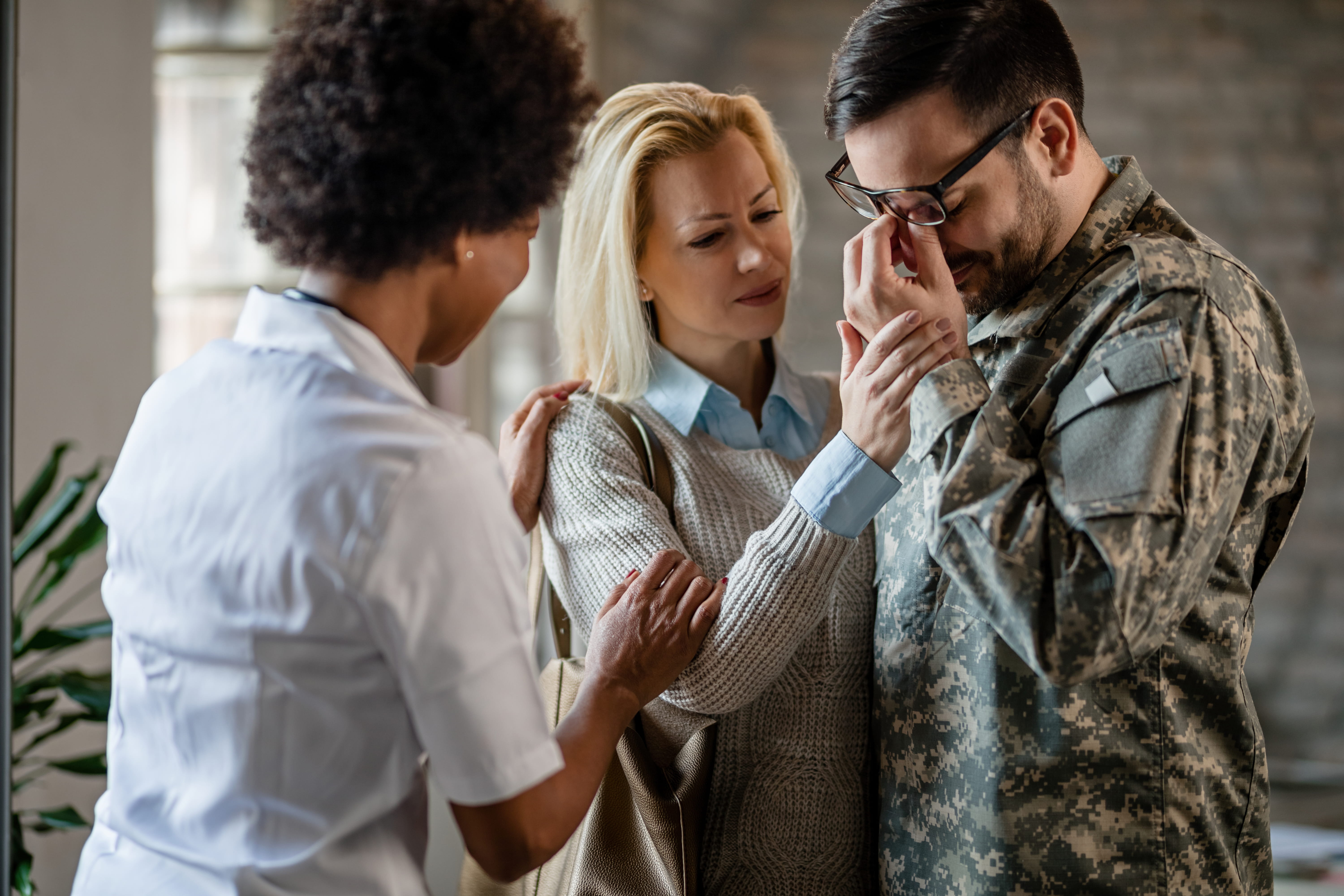
I served from 2003-2007. I did a tour to Iraq from 2005-2006. I bounced around Iraq to several areas to conduct various combat operations. During this time, I witnessed horrible and tragic things. I saw fellow soldiers severely injured on several occasions as well as seeing dead Iraqi’s whether by our own hand or by the enemy.
Upon returning home, the Army said “it is okay to seek mental health treatment”, but the underlying message was “don’t you dare”. Moreover, it was common within the culture of the Army, especially with combat roles, to not complain. Just suck it up and drive on. If you were feeling depressed or anxious, the cultural fix was to have a few drinks.
I did not feel supported by anyone in my leadership regarding how I was feeling or the reoccurring nightmares I was having. Their response was again, have a few drinks. This was demoralizing. I decided to seek out treatment at Evans Community Hospital. I was diagnosed with PTSD and TBIs. Once the Army caught wind of this, I was immediately medically discharged. I was given no option to change jobs nor continue treatment to get better so I could keep doing my job. I was treated like trash. I was no longer useful.
I tried going to the VA to continue care for my PTSD and other injuries, but every time I went to a PTSD appointment, it was someone new. Every time I had to retell my story and continuously relive my experiences without getting any actual care. I gave up. I just did what I did in the Army; suck it up and drive on. I drank to cope with and suppress the anger and sadness. Eventually it got to the point where I side-swiped a car while parking. My wife (then girlfriend) gave me an ultimatum; get help or get out. All I did was quit drinking. It helped some, but the troubles still existed.
I tried to run away from my problems, thinking new scenery would be the fix I needed. So, we moved to Maine. After moving to Maine, I started to use alcohol to medicate, again. At first, it was fine. I was handling relatively well. I thought if I stuck to beer and wine, I would be okay. I was wrong. At one point I ran out of beer at home. No one was there as my family were out of town. At the time, there were no delivery services. So, I decided that I would go get some. During this “quick” run, I was pulled over, arrested, and given a DUI.
The years following I did not seek out treatment. I felt numb to the world. I could not feel happiness in anything I did. This took a toll on my family. I drank to self-medicate. I was always angry and unapproachable. My family had to walk on eggshells around me to avoid being victim to my angry outbursts. There were two instances where I tried to commit suicide. Once with pills, because I thought my wife (then girlfriend) would be better off without me. The second time, I crashed my car into a light pole. Prior to the crash, I had lost several friends to suicide. All of the memories that I repressed came flooding back. I fell into a very dark place. I drank, hard. I was driving home listening to a song with the lyric of “crash my car just to feel again” and in that moment I decided to do just that.
It was after this crash that I finally relented and sought treatment. I went to the Marcus Brain Institute (MBI) for my TBIs. It was during this treatment that I tried art therapy. It broke me. I felt apart crying, not realizing what was happening to me and how it was affecting everyone around me. MBI referred to an organization that connected me to a therapist to help with my PTSD. I spent several months working on my PTSD and using the mechanisms given to me by MBI. Through this work I finally got my life back. I have been able to enjoy time with my family, not feel anxious in every setting outside of my home, and not get angry about every little thing.
What is sad is the failure of our government to keep their promise and help me. Help us. I am one of thousands of veterans who have had the same experiences. Granted, efforts have improved in providing care, but at what cost? How many committed suicide because they could not bear the weight? How many committed suicide to end the burden (they thought they were) on their families? How many families were ruined when a little bit of care could have made all the difference?
Today I work with transitioning service members. I have seen the damage the military culture has created by not seeking treatment, so you don’t look “weak”. These men and women have done the same thing I did, sucked it up. Many have had multiple marriages fail. Some no longer have custody of their children. Others have taken their lives even before taking off the uniform. I have seen the misuse of alcohol and drugs to medicate. I have seen how this has damaged families and ended careers. All because they did not want to look weak to their brothers and sisters, families, and the military.