
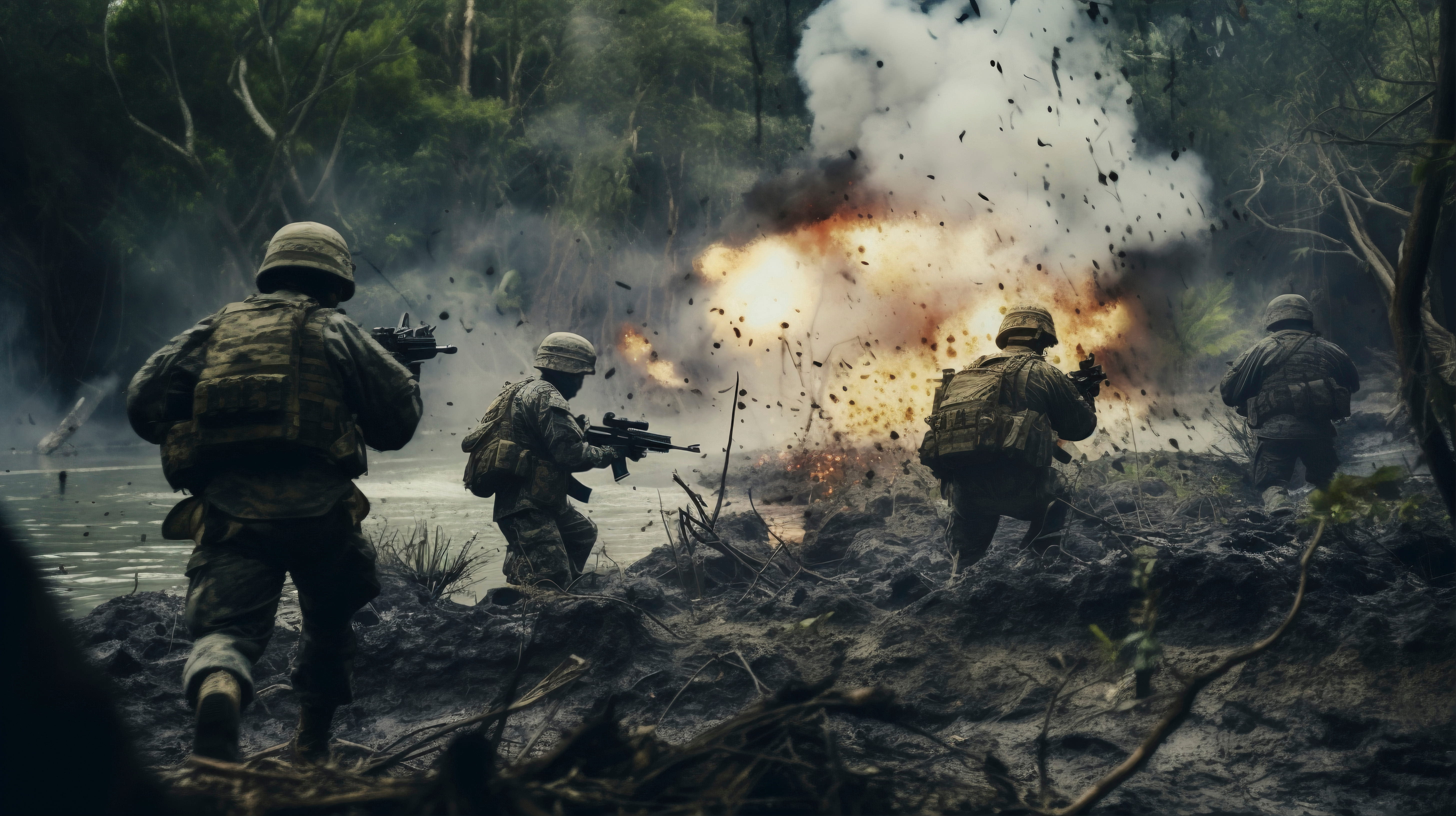
Mechanism-based Brain Injury
1. Impact and Acceleration-Deceleration TBI
a. Combatives- knocked unconscious several times during fights starting in the Q Course and Basic
b. Airborne- heavily bruised my tailbone in Airborne school, Free fall slamming into the ground at full speed during a night jump; roughly 50 jumps total
c. Vehicle Crash- I conducted most of a front flip in a Polaris MRZR, slamming into the ground and losing consciousness
d. Recoil- firing upwards of 100 rockets throughout my life, to include RPGs and Gustav recoilless rifles (hint: they’re not recoilless)
2. Blast-Related Brain Injury (Pri/Sec/Ter/Quar)
a. Primary- thousands of blasts exposures from smaller interior charges, to larger heavy wall breaching in both training and combat, taking down 20 foot walls of compounds during raids, tens to hundreds of thousands of MG rounds during training and combat, hundred of mortars in training, thousands in combat
b. Secondary- Weapon exploded in my hands covering my face and neck in shrapnel
c. Tertiary- Not sure
d. Quaternary- numerous burn pits, Africa, Middle East, Bosnian air quality was in the top ten for worst in the world daily
3. Repetitive Low-Level Blast Exposure (Subclinical but Cumulative)
a. Fortunate enough to not only be around small-arms daily at work, but I also shoot competitively with larger muzzle brakes created significantly more over-pressure during my matches and training sessions that are conducted weekly, sometimes several days a week
4. Acceleration / G- Force-Related Brain Injury (Maritime and Maneuver)
a. 40+ air insertions during my final combat rotation, vestibular system severely compromised after years of trauma
Personal Narrative:
In my early SOF years, TBIs and blast exposure was generally pretty infrequent. Exposure was limited due to the nature of “white side” ODA’s training cycles. We had one demo range a month, which generally consisted a medium sized blast that we endured in a bunker. Even on my first deployment, exposure was generally limited (couple grenades, some live-fire CQB, etc.). I did actually have a riot grenade go off in my face, but that was more due to my own immaturity and naivety than any sort of prescriptive combat/training event.
The large shift happened when I transitioned into the Commanders In-Extremis Force, or CIF for short. I was immediately sent to our premier CQB school, the Special Forces Advanced Reconnaissance, Target Analysis and Exploitation Techniques Course (SFARTAETC). This course was nine weeks of firing weapons in close proximity, detonating 5-25 charges a day, and throwing upwards of 30 flashbangs. Exposure absolutely ramped up. This was only eclipsed by returning to my unit and spending the next seven years operating in a unit which conducted this type of training weekly. Tuesday through Thursday was spent either on a flat range shooting, in a shoothouse conducting CQB (with bangs and bombs), or conducting heavy breaching and Full Mission Profiles (FMPs).
During these formative years, I deployed to Iraq three times, and Afghanistan twice. Luckily for me, I endured at least one major TBI per deployment, depending. These ranged from blunt force trauma to literally being hit with an enemy mortar while engaging in close combat.
Naturally, after my final Afghan rotation, I figured a change in venue was probably necessary. I then began my three-year stint as a Special Forces Advanced Urban Combat Course (SFAUC-C) Instructor, where I taught Combat Marksmanship (CMMS), CQB, Breaching, and Urban Maneuver. Cue three more years of eating numerous charges, blasts, flashbangs, and grenades.
Following my time as an instructor, I returned to the operational detachments as a Team Sergeant and constructed three-years of training that really leaned into my expertise; Direct Action and more blasts. From an operational deployment to Bosnia and Herzegovina which centered only on Counter-Terrorism, to FMPs in Dallas, TX fast roping onto the FBI headquarters building to conduct CQB, my operational tempo (OPTEMPO) didn’t slow.
Concluding my team sergeant time, I felt I was finally due for a break. So I took the position of NCO in charge (NCOIC) of the SFAUC Det and continued to expose myself to the same number of blasts and bombs I had for the past 17 years.