
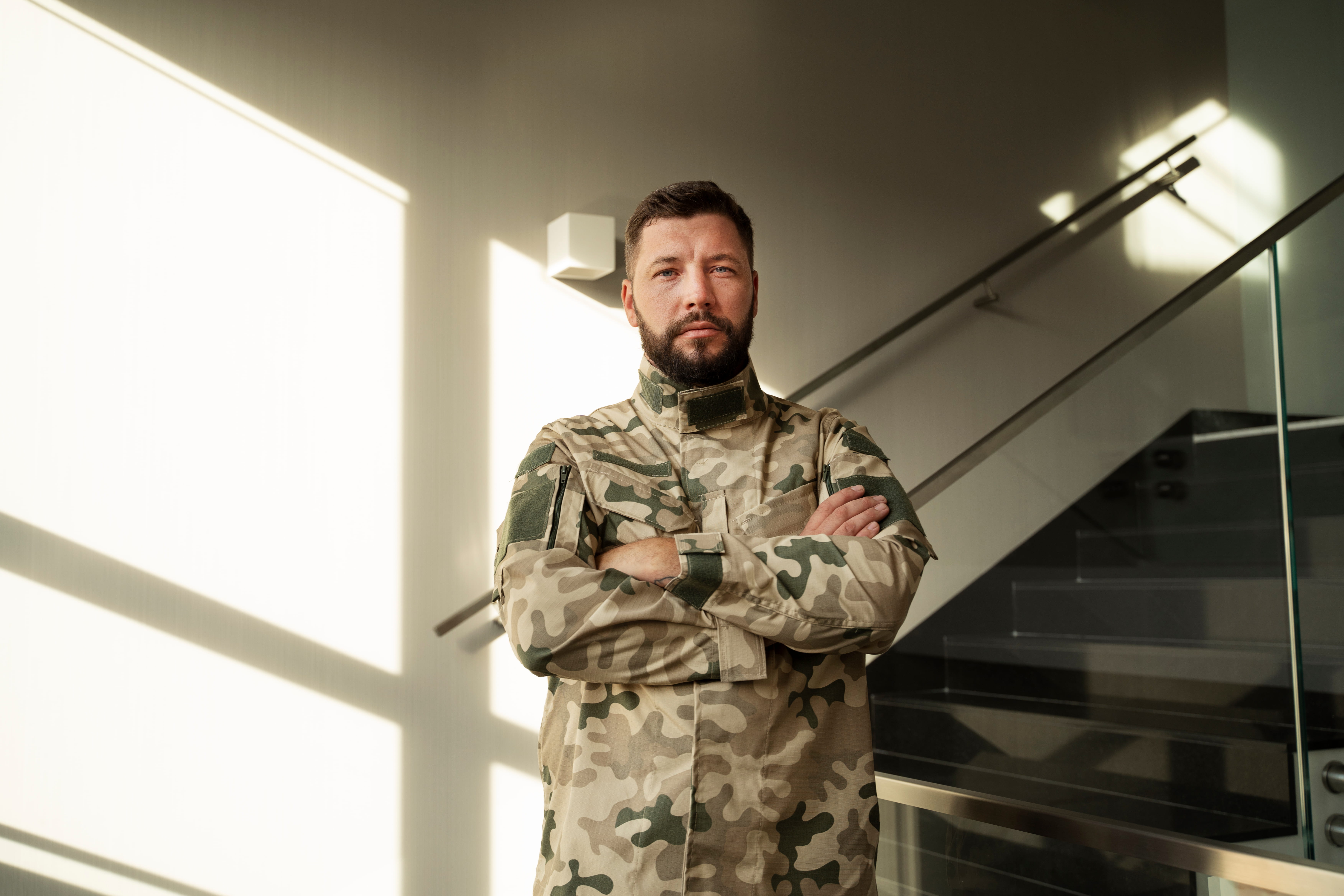
I. READY: The summer of 2007, I deployed to Baghdad, Iraq as part of a B-Team — augmentation and sustainment for the Special Forces ODAs operating in our area of operations. I had spent two years earning the right to wear the beret. Two years of training that pushed me past every limit I thought I had, and then showed me I had more. I was ready. I was excited. Whatever waited for me downrange, I believed I was built for it. What waited for me at home was a wife of eighteen months, a five-year-old son, and a three-year-old daughter. They were stationed in a state a thousand miles from where either of us had roots, a thousand miles from the people who would have shown up when things got hard. My wife would manage all of it alone. I knew that. We both knew that. And we both told each other it would be fine. We were both lying, and we both knew that too.
II. RECALIBRATION: Baghdad in 2007 was not what I had imagined, though I am not sure I could have imagined it accurately. Rocket attacks nearly every day. Urban fighting, house to house, close and personal. And the insurgents had started using EFPs — Explosively Formed Penetrators — shape charges that cut through armored vehicles like they were made of paper. Through Abrams tanks. Through whatever we were riding in. You cannot spend very long in that environment before your mind makes a decision you don't consciously authorize. Mine decided, quickly, to become comfortable with the possibility of dying or being permanently broken. It was not a choice in any dramatic sense. It was simply a recalibration — a survival mechanism the mind deploys when the alternative is paralysis. I started adjusting my body position in the gun turret of the Humvee. One leg forward, one leg back. My logic was simple: if we hit an EFP, maybe I only lose one leg instead of two. I thought about this calmly, the way you think about the weather. I was operating unarmored fuel trucks on certain runs, and the only comfort I could find in that assignment was that if we took a direct hit, I would never know it. That thought did not frighten me. It settled me. One afternoon, moving through Baghdad, I pointed out a location to the crew and told them it would be a perfect place to drop an EFP. The insurgents agreed with my assessment. The next day, a Sergeant Major from 1st Group was killed at that exact spot. From the jaw up. I absorbed that information and kept moving. There was nothing else to do. What I did not understand at the time was that the recalibration does not stay downrange. You carry it home in your chest like a piece of shrapnel that didn't quite reach anything vital. When I came back, I was weaving through traffic on my motorcycle, climbing rock faces without safety lines, getting closer to sectors of fire than I needed to just to test whether my trust in the men next to me was absolute. I told myself these were calculated risks. I was managing them. What I was actually doing was feeding a nervous system that no longer knew how to be at rest.
III. PERFORMING FINE: When I came home from that first deployment, everyone wanted me to be the same. My wife. My kids. Me, most of all. And on the surface, I was. I looked the same. I could make the same jokes, hold the same conversations, perform all the social behaviors that signal normalcy to the people around you. But underneath that performance, something had shifted in ways I could not fully articulate, and would not begin to acknowledge for years. My expectations of everyone around me had climbed to a level that no family could sustain. I was always on alert, always scanning, never able to fully stand down even in my own living room. It was genuinely difficult for me to play with my children without some part of my attention cataloging exits, threat vectors, anything that moved wrong. I was protecting them from dangers that existed only in the part of my brain that had not yet received word that the war was over. My wife and I were communicating the way soldiers communicate when they know the channel is monitored — carefully, efficiently, keeping the actual situation off the record. We had talked about once a week by phone during the deployment, with more regular contact through email and instant messenger. In every exchange, we were both performing fine. She didn't tell me how badly she was struggling. I didn't tell her what I had seen. We were protecting each other, and in doing so we were slowly becoming people who didn't fully know each other anymore. It would be nearly twenty years before I began to tell my wife some of what had happened over there. My children — who are now twenty-five and twenty-two — I have never told.
IV. THE TEMPO: Four combat deployments and two operational deployments over the course of a twentyyear career. Not counting the training workups, the weeks and months spent preparing to go away, which in their own way constitute a kind of absence. When I was on the ODAs and ODEs, I was home approximately three to four months out of every year. Three to four months. Out of twelve. What happens to a family built around that structure is not dramatic, most of the time. It is not a single rupture. It is a slow, daily renegotiation of what normal means. My wife and children built a life — a functioning, loving, resilient life — that had learned to run without me as a load-bearing element. They had to. I was not there. The alternative was to be perpetually in a state of waiting for a man who might not come back, and nobody can live in that holding pattern indefinitely and stay whole. So they moved. They adapted. They built parallel lives, as any rational people would. I came home to a family that loved me and had quietly, necessarily, figured out how to exist without me. And I came home holding a set of standards built for men who operated at the absolute edge of human performance, and I applied those standards to a five-year-old, to a three-year-old, to a woman who was already doing the work of two parents while managing her terror that I might not come back. It must have been genuinely miserable to be on the receiving end of that. I can say that now. At the time, I could not see it.
V. INHERITANCE: There was a man who had a profound influence on me in my early years in Special Forces. My first Team Sergeant. Downrange and in training, he was magnetic — the kind of leader who made you believe that the way he did things was simply the way things were done. I was wide-eyed. I modeled myself on him. It was not until I became a Team Sergeant myself that I could see clearly what I had been modeling. Underneath the competence and the command presence was a man running from something, held together by deployments and the constant forward momentum of the mission. When the tempo slowed, what was underneath came out: severe alcoholism, drug use, patterns of behavior at home that no one should have to endure. The methods he used to lead were psychologically damaging to everyone around him, including to us, and we were too young and too deep in it to recognize the damage because we were busy trying to become him. I and others on that original team spent years trying to replicate something that was broken at its foundation. It cost us professionally. It nearly cost some of us everything at home. The unlucky ones did lose everything. And for a long time, we dealt with that the way we dealt with most things: we drank, and we laughed, and we called it camaraderie, and we told ourselves we were fine. When it was my turn to lead, I tried to do better. Whether I succeeded is not mine to say. Only the men who served under me can answer that honestly, and I have tried to make my peace with not knowing. What I can see now is the inheritance my own children received. My son has his father's work ethic — relentless, high-standard, successful. He has also inherited the blind spot: his professional life flourishes while his personal life quietly bears the weight of his absence and his impossible expectations. I watch him and I see myself at his age, and I am afraid for him in a way I cannot fully express without feeling the sting of how much of that I caused. My daughter carries her armor differently. There is an anger in her — a controlled, deliberate emotional distance — that she deploys to keep herself from being hurt. She learned it from watching me shut everything out, go blank, perform indifference to blunt the edges of things that actually cut deep. She learned it because it looked like strength. She was wrong about that, and I was the one who taught her to be wrong. The numbness she wears is mine, handed down without a word being spoken.
VI. WHAT I WAS PROTECTING: The Army trains you to accept risk. It trains you to be comfortable with outcomes that would break a civilian's mind. I got very good at that. I could sit in a Humvee turret over a route where a Sergeant Major had his head taken off and be present, focused, functional. I could ride an unarmored fuel truck through contested streets and find the thought of instantaneous death genuinely comforting. I recalibrated so thoroughly that I could no longer feel the weight of what I was asking my family to carry, because I had become too good at not feeling weight. What I know now, and could not have told you then, is that I would have been completely destroyed if I had lost them. All of it — the shutdown, the indifference, the walls — it was a facade. The man underneath it was someone who needed his wife and children more than he could admit, because admitting need felt like the one vulnerability he could not afford. And so he performed toughness at the people he loved most, and called it protecting them, and called himself fine, and kept moving. My wife's faith held our family together during the years I was unable to. She was raised in a household built on something solid — her grandparents' marriage and faith in God, a foundation that did not move when everything around it did. That faith was the thing I could not see clearly for much of my career, and it was the very thing that kept the people I loved most in the world from walking away from a man who was giving them very good reasons to. I am different now. Not finished — not by a long way — but different. I am showing up daily for people who spent decades watching me leave. I try to be honest about what I got wrong. I try to let them see me change, even when the change is small and slow and goes unnoticed. Some days they see it. Some days they don't. I do not stop because of the days they don't.
VII. THE AFTER-ACTION REPORT NOBODY WRITES: In the Army, we do After-Action Reviews. AARs. The principle is simple: you look honestly at what happened, what worked, what didn't, and what needs to change. You do not do an AAR to punish people. You do it because nothing improves without honest accounting. Nobody does an AAR on what the operational tempo of GWOT did to our families. Nobody sits down with the people we left behind and asks, formally, what was the impact of what we put you through. Nobody rates that mission. Nobody tallies the cost. So I am writing this instead. You had to be good at your job. The stakes were real — people died when you weren't, and sometimes even when you were. That is true. That will always be true. But the Army will not be there for you at the end. It will process your paperwork, thank you for your service, and turn toward the next man in line. The Army is an institution. It does not love you. Your family loves you. Or they did, and they are still trying to, despite everything you put them through while you were busy being a warrior. The question worth asking — the AAR question — is whether you will be honest enough with yourself to see what it cost them, before you use up whatever time you have left. Don't tell yourself they are stronger because of how you were. Maybe some of them are. But strength built on surviving a parent's emotional absence, or a spouse's impossible standards, or two decades of watching someone they love walk out the door and come back subtly different each time — that is not the strength you wanted to build in them. It is not something to take credit for. What you want — what I want — is to look at the people still standing beside you and know they are there because they choose to be. Not because of obligation. Not because they have nowhere else to go. Because they love you, and because somewhere along the way, you gave them enough of the real version of yourself that the love had something solid to hold onto. I am still working on that. I suspect I will be working on it for the rest of my life. God didn't make me the kind of man who gets to run from that, and I am grateful for it, even when it's hard. The mission had a cost. It is time to be honest about what it was.
— Anonymous, U.S. Army Special Forces (Ret.)